


Quantum computing represents one of the most important technology shifts after analog and digital computers. Instead of using ordinary bits that store either 0 or 1, quantum computers use qubits that can work with multiple possible states at once. This gives them the potential to solve problems that are far beyond the reach of today's classical machines.
By Editorial Team | Reading time: 10 minutes
Introduction
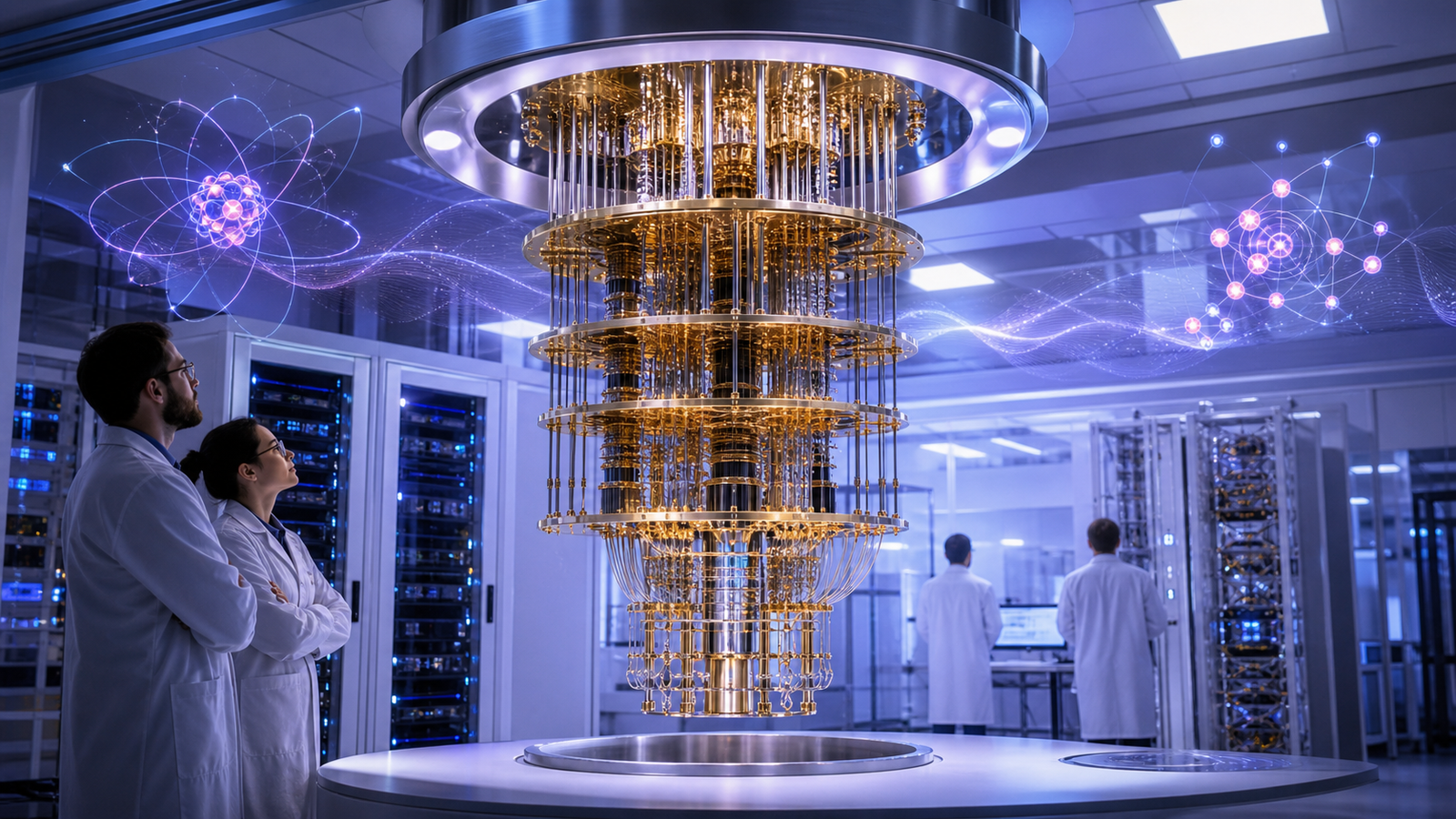
Digital computers transformed nearly every part of modern life, from business and banking to communication, entertainment, science, and national security. Quantum computers may create an even deeper revolution because they compute at the level of atoms and quantum particles, the fundamental building blocks of matter.
The race to build powerful quantum computers now involves major technology companies, governments, universities, and security agencies around the world. The stakes are high because quantum machines could reshape the economy, change how science is done, and challenge the encryption systems that protect digital information today.
Physicist Dr. Michio Kaku, author of Quantum Supremacy, describes quantum computing as the next major stage in the evolution of computation. This article explains what quantum computers are, how they work, why they matter, and what challenges still stand in the way.
Table of Contents
- What is quantum computing?
- Why quantum computing matters
- The three stages of computing history
- How quantum computers work
- Bits vs qubits
- The main challenge: decoherence and noise
- Potential impact across industries
- Long-term scientific possibilities
- Key insights
- Glossary
- FAQ
- Conclusion
What is Quantum Computing?
Quantum computing is a new approach to computation that uses the behavior of quantum particles, such as electrons and atoms, to process information. While ordinary computers use transistors and binary bits, quantum computers use quantum bits, also called qubits.
A classical bit can represent only one value at a time: 0 or 1. A qubit can represent 0, 1, or a combination of both through a quantum property called superposition. When many qubits are connected through another quantum property called entanglement, they can explore many possible solutions in parallel.
This does not mean quantum computers will replace normal computers for every task. Instead, they are expected to be especially powerful for certain difficult problems in chemistry, physics, medicine, materials science, optimization, and cryptography.
Why Quantum Computing Matters
Quantum computing matters because it could change how humanity solves complex problems. Some calculations are so difficult that even the fastest supercomputers would take years, centuries, or longer to solve them. Quantum computers may be able to approach certain problems much more efficiently.
The technology could affect many areas, including:
- The global economy
- Scientific research
- Cybersecurity and encryption
- Drug discovery and medicine
- Energy and fusion research
- Agriculture and food production
- Artificial intelligence and advanced modeling
National security agencies also monitor quantum computing closely because powerful quantum machines may eventually break many encryption systems used to protect banking, government, military, and personal data.
The Three Stages of Computing History
The history of computing can be understood in three major stages: analog computers, digital computers, and quantum computers.
1. Analog Computers
Analog computers use continuously measurable physical systems to perform calculations. Ancient people used physical objects such as sticks, bones, and mechanical devices to count, measure, and predict events.
One famous example is a 2,000-year-old device discovered in a shipwreck. It was designed to map the movements of the Moon, Sun, and planets. Later, inventors such as Charles Babbage developed mechanical machines with gears and levers to calculate values useful for navigation, commerce, and banking.
2. Digital Computers
Digital computers became essential in the 20th century. Mechanical analog machines were not powerful enough for tasks such as codebreaking during World War II. Alan Turing helped formalize the laws of computation and showed how digital machines could process information using binary logic.
Modern digital computers use transistors that switch between two states, 0 and 1. Every laptop, phone, server, and cloud system today is based on this digital model.
3. Quantum Computers
Quantum computers represent the emerging third stage. Physicist Richard Feynman helped popularize the idea that computers based on quantum mechanics could simulate nature more directly than classical machines.
Instead of relying only on classical transistors, quantum computers use atoms, electrons, photons, or other quantum systems. These systems can behave like waves and particles, allowing a qubit to hold richer information than a classical bit.
How Quantum Computers Work
Classical computers operate through binary states. A transistor is either off or on, representing 0 or 1. At the atomic scale, however, nature behaves differently. Quantum particles can act like waves and exist in multiple possible states until measured.
This property is called superposition. It allows a qubit to represent more than one possibility at the same time. Quantum computers also use entanglement, where the state of one particle becomes connected with the state of another, even when separated.
Together, superposition and entanglement allow quantum computers to process certain types of information in ways that classical computers cannot efficiently copy.
Schrodinger's Cat and Superposition
The famous Schrodinger's cat thought experiment is often used to explain superposition. In the example, a cat in a sealed box can be described as both alive and dead until the box is opened and the system is measured.
In quantum computing, this idea helps explain how a qubit can hold multiple possible states before measurement. Quantum computers use this strange feature of nature to perform calculations that may be impossible or extremely slow for classical computers.
Bits vs Qubits
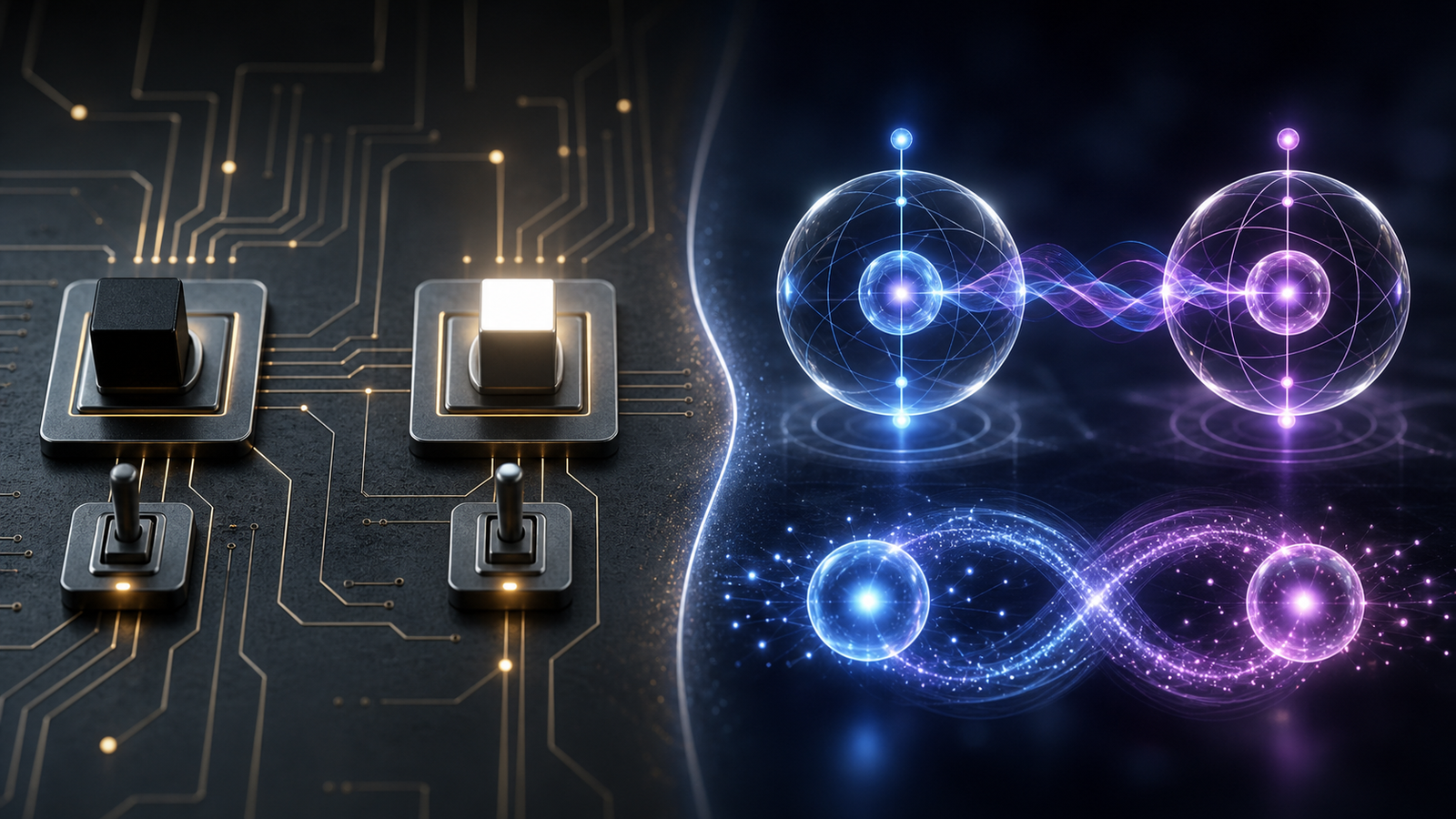
| Property | Classical Bit | Quantum Qubit |
|---|---|---|
| State | 0 or 1 | 0, 1, or a superposition of both |
| Technology base | Transistors and digital circuits | Quantum particles and quantum states |
| Processing style | Sequential or parallel classical operations | Quantum operations using superposition and entanglement |
| Typical scale | Billions of bits in modern computers | Thousands of qubits today, with a long-term goal of millions |
| Main weakness | Limited for certain extremely complex simulations | Fragile quantum states and high error rates |
A single qubit can represent more than the simple on-or-off state of a classical bit. The real power of quantum computing grows when many qubits work together through superposition and entanglement.
The point where a quantum computer performs a specific task better than a classical computer is called quantum supremacy. This has already been demonstrated for selected tasks, but broad practical quantum advantage is still an active research goal.
The Main Challenge: Decoherence and Noise
The biggest engineering challenge in quantum computing is decoherence. Quantum computers depend on delicate quantum states staying coherent, meaning their wave-like behavior remains synchronized long enough to perform calculations.
When a quantum system interacts with its environment, it can lose coherence. This creates noise and errors, making calculations unreliable. To reduce this problem, many quantum systems must operate at temperatures close to absolute zero.
However, nature offers clues. Biological processes such as photosynthesis appear to use quantum effects at room temperature. This suggests that stable quantum behavior may be possible in more practical environments, inspiring new research into better quantum designs.
Potential Impact Across Industries
If quantum computers become reliable and scalable, their impact could be transformative across many fields.
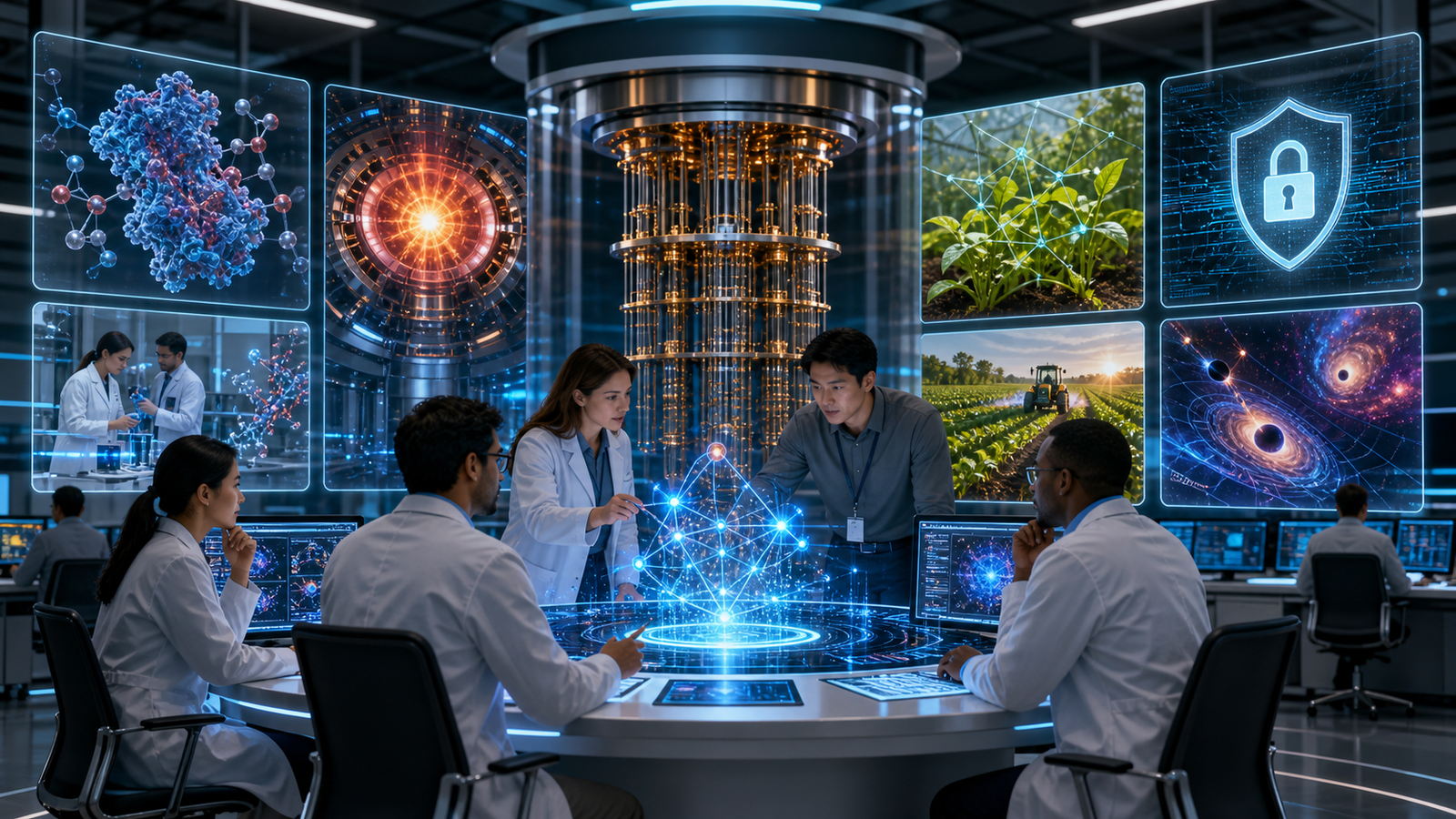
| Field | Possible Quantum Contribution | Why It Matters |
|---|---|---|
| Food supply | Model nitrogen fixation | Could help improve fertilizers and global agriculture |
| Energy | Simulate fusion reactions | Could support practical clean fusion energy |
| Medicine | Model diseases at the molecular level | Could improve treatment for Alzheimer's, Parkinson's, cancer, and other diseases |
| Cybersecurity | Break or test encryption systems | Could force a global move toward quantum-safe security |
| Materials science | Simulate atoms and molecules more accurately | Could lead to stronger materials, better batteries, and new chemicals |
One of the most exciting promises is medicine. Quantum computers may eventually model complex molecules and diseases in ways classical computers cannot, helping researchers move from treating symptoms toward understanding disease at the molecular level.
Long-Term Scientific Possibilities
Dr. Kaku and other physicists believe quantum computers could eventually help answer some of the deepest questions in science. One long-term dream is using quantum computers to help calculate a theory of everything, a unified framework connecting quantum mechanics and general relativity.
Such a theory could help explain black holes, supernovae, the evolution of galaxies, and the fundamental laws of the universe. Today's equations are often too complex for classical computers, but quantum machines may eventually give scientists new tools for exploring them.
Key Insights
- Quantum computing is the next major stage after analog and digital computing.
- Qubits gain power from superposition and entanglement.
- Quantum computers could solve selected problems that are impossible or impractical for classical computers.
- Decoherence and noise remain the biggest technical barriers.
- Major future impacts may include breakthroughs in food supply, energy, medicine, cybersecurity, and physics.
- The global race for quantum advantage is driven by both commercial competition and national security concerns.
Glossary
| Term | Definition |
|---|---|
| Analog computer | A device that works with continuously measurable physical quantities instead of discrete digital values. |
| Digital computer | A device that operates on discrete binary states, usually 0 and 1. |
| Qubit | A quantum bit that can exist in multiple superposed states unlike a classical bit. |
| Superposition | A quantum property where particles can exist in multiple possible states until measured. |
| Entanglement | A quantum connection where the state of one particle is linked with the state of another. |
| Decoherence | The loss of a coherent quantum state, causing errors due to noise and environmental interference. |
| Quantum supremacy | The point where a quantum computer performs a specific task beyond the practical ability of a classical computer. |
Frequently Asked Questions
What is quantum computing in simple words?
Quantum computing is a way of computing that uses quantum particles instead of ordinary binary bits. It can process certain complex problems in ways classical computers cannot easily match.
Will quantum computers replace normal computers?
No. Quantum computers are not expected to replace normal computers for everyday tasks. They are designed for special problems, such as molecular simulation, optimization, cryptography, and advanced scientific modeling.
What makes qubits different from bits?
A bit is either 0 or 1. A qubit can be 0, 1, or a superposition of both. This allows quantum computers to explore many possible states during computation.
Why are quantum computers difficult to build?
Quantum states are extremely fragile. Heat, vibration, electromagnetic noise, and other environmental effects can cause decoherence, which leads to errors in calculation.
Why do governments care about quantum computing?
Governments care because quantum computing could affect national security, encryption, defense, economic competitiveness, and advanced scientific research.
What is quantum supremacy?
Quantum supremacy is the point where a quantum computer performs a specific task that would be practically impossible for a classical computer to complete in a reasonable time.
Conclusion
Quantum computing could become one of the most important technological revolutions of the century. By using the strange but powerful laws of quantum mechanics, these machines may solve problems that classical computers cannot handle efficiently.
The promise is enormous: better medicines, cleaner energy, stronger materials, improved food production, deeper physics, and new approaches to cybersecurity. At the same time, the challenges are serious. Decoherence, noise, scaling, and reliability must be solved before quantum computers can reach their full practical potential.
The quantum revolution is still developing, but its direction is clear. The countries, companies, and researchers that understand and master quantum computing may help shape the future of science, security, and the global economy.
Leave a comment
Your email address will not be published. Required fields are marked *